
Are you planning to buy a property? Before making any investment, it is essential to ensure that the property is legally clear and free from financial liabilities. One of the most important documents that helps you verify this is the Encumbrance Certificate (EC).
An Encumbrance Certificate provides a detailed record of all financial and legal transactions related to a property. In simple terms, it confirms whether the property has any existing loans, mortgages, or legal dues. Whether you are buying your dream home or investing for the future, an EC plays a crucial role in ensuring a safe and transparent transaction.
Why is an Encumbrance Certificate Important?
Understanding the importance of an EC is critical for anyone involved in real estate transactions. Here’s why:
1. Proof of Ownership
An EC helps establish a clear ownership title. It ensures that no other individual or entity has a legal claim over the property.
2. Protection from Liabilities
When purchasing a property, there is always a risk of inheriting past debts. An EC confirms that the property is free from financial obligations such as loans or mortgages.
3. Essential for Home Loans
Banks and financial institutions require an EC before approving a home loan. It assures them that the property has no legal complications.
4. Required for Property Transactions
An EC is necessary during buying, selling, or transferring ownership. It ensures a smooth mutation process in government records.
5. Helps Maintain Tax Records
If property taxes are pending for more than three years, an EC is used to update land or property tax records with local authorities.
6. Needed for PF Withdrawal
In certain cases, an EC is required when withdrawing funds from a Provident Fund for property-related purposes.
How to Apply for an Encumbrance Certificate
Online Process
Most states in India offer online EC services. The process typically includes:
- Visiting the state’s land registration website
- Entering property details
- Paying the required fee
- Downloading the certificate once issued
You can also track the application status online to verify property details and legal standing.
Offline Process
In states where online services are not available:
- Visit the Sub-Registrar’s Office
- Submit a written application along with Form 22
- Pay the applicable fee
After verification, the EC is issued. If no transactions are found during the selected period, a Nil Encumbrance Certificate is provided.
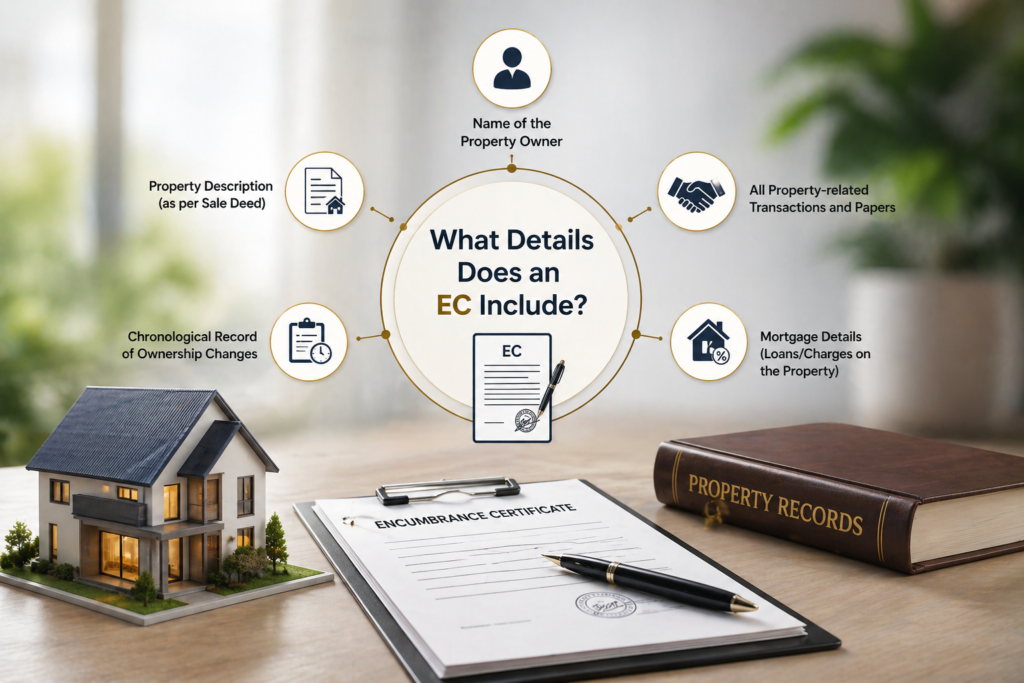
What Details Does an EC Include?
An Encumbrance Certificate contains:
- Name of the property owner
- Property description (as per sale deed)
- Complete transaction history
- Mortgage or loan details
- Chronological record of ownership changes
Note: The EC reflects data only for the time period requested during the application.
Processing Time
Typically, an EC is issued within 15 to 30 days from the date of application, depending on the state and verification process.
The Future of Encumbrance Certificates
With rapid digital transformation, ECs are becoming more accessible and efficient. In the near future:
- Fully digital EC systems will be standard
- Faster verification and approvals will be possible
- Integration with other property records will improve transparency
This evolution will make property transactions more secure and hassle-free for buyers, sellers, and financial institutions.
Conclusion
An Encumbrance Certificate is a vital document in any property transaction. It ensures that the property is legally clear, financially secure, and safe for investment. Understanding how to apply for and verify an EC can protect you from potential risks and complications.
At Burrownest Realty, we prioritize transparency and professionalism in every transaction. From documentation to final handover, we ensure that every property we deal with meets legal standards—giving you complete peace of mind while making one of life’s most important investments.