
Introduction
Urban landscapes are rapidly evolving, and one of the most defining elements of modern cities is the rise of high rise buildings. But what exactly is a high rise building, and why are they becoming essential in today’s real estate and infrastructure development?
A high rise building refers to a tall, multi-storey structure designed for residential, commercial, or mixed-use purposes. As per global standards, buildings exceeding 75 feet (23 metres) in height are typically classified as high rise, while in India, the National Building Code (NBC 2016) defines high rise structures as those above 15 metres.
With increasing population density and limited land availability, high rise buildings offer a smart, scalable solution for urban expansion—combining engineering excellence, modern amenities, and efficient space utilization.
What Is a High Rise Building? (Definition & Meaning)
A high rise building is a vertically constructed structure with multiple floors that requires mechanical vertical transportation, such as elevators, for movement between levels.
Unlike low-rise buildings, high rises are engineered with advanced structural systems to handle:
- Wind loads
- Seismic forces
- Fire safety challenges
- Heavy occupancy loads
These buildings rely on reinforced concrete or steel frameworks, making them structurally robust and capable of reaching significant heights.
High Rise Building Classification in India
According to NBC 2016, a building is classified as high rise if:
- Its height exceeds 15 metres (49 feet)
- It requires special fire and safety regulations
- It includes elevators for vertical movement
This classification determines critical compliance requirements such as fire safety norms, evacuation systems, and structural design standards.
Key Features of High Rise Buildings
High rise buildings are defined by a combination of structural, technological, and lifestyle features:
1. Structural Strength & Design
- Use of RCC (Reinforced Cement Concrete) or steel frameworks
- Designed to withstand environmental forces
2. Vertical Transportation
- High-speed elevators
- Service lifts and sometimes escalators
3. Advanced Fire Safety Systems
- Fire-resistant materials
- Sprinklers and smoke detectors
- Emergency staircases
4. Mechanical & Electrical Systems
- Centralized HVAC systems
- Power backup and smart controls
- Advanced plumbing infrastructure
5. Modern Amenities
- Clubhouses, gyms, swimming pools
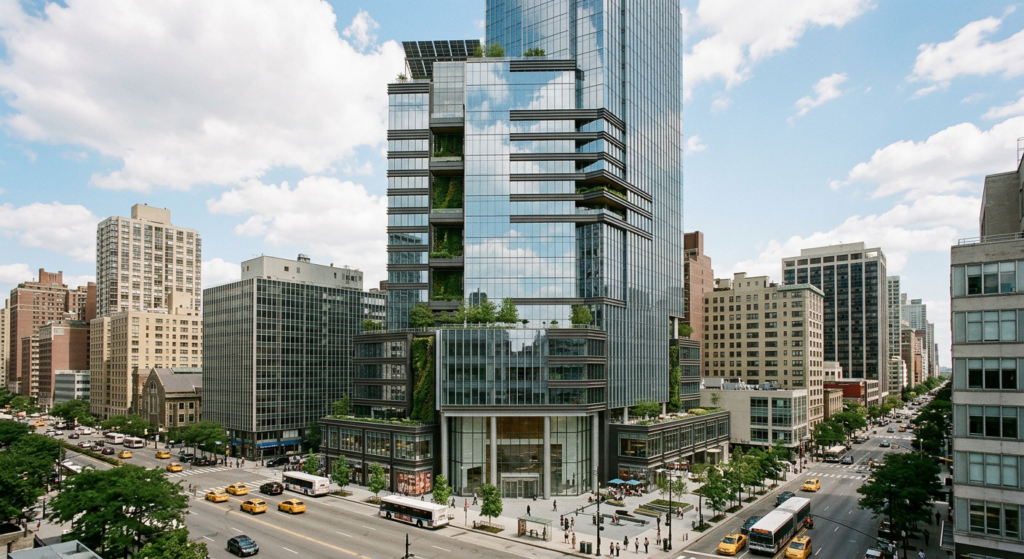
- Rooftop spaces and landscaped areas
- Security systems with surveillance
6. Sustainability Features
- Solar panels
- Rainwater harvesting
- Energy-efficient designs
Types of High Rise Buildings
1. Residential High Rise Buildings
Designed for housing multiple families, these buildings offer modern living with amenities and security, especially in metro cities.
2. Commercial & Office Towers
Used by businesses, IT firms, and corporate offices, these buildings feature flexible layouts and advanced infrastructure.
3. Mixed-Use Developments
Combining residential, retail, office, and hospitality spaces, these buildings promote a “live-work-play” lifestyle.
4. Luxury & Green Certified High Rises
Premium developments offering high-end finishes, smart homes, and eco-friendly certifications like LEED or WELL.
How High Rise Buildings Are Constructed
The construction of a high rise building involves multiple complex stages:
- Planning & Design – Architectural and structural blueprint
- Foundation Work – Deep foundations for stability
- Core Construction – Central structural support system
- Structural Framing – Floor-by-floor construction
- MEP Installation – Mechanical, electrical, plumbing systems
- Facade & Interiors – External cladding and internal finishing
- Testing & Approvals – Safety checks and certifications
Technologies like BIM (Building Information Modeling) and prefabrication are widely used to improve efficiency and precision.
Fire Safety in High Rise Buildings
Fire safety is critical due to the height and density of occupants. Essential measures include:
- Automatic sprinkler systems
- Smoke alarms and detectors
- Fire-resistant doors and walls
- Clearly marked evacuation routes
- Fire drills and emergency planning
- Fireman lifts and access routes
Compliance with NBC and local fire authorities is mandatory.
Advantages of High Rise Buildings
- Efficient land utilization in urban areas
- Access to prime locations and infrastructure
- Enhanced security and surveillance
- Modern lifestyle amenities
- Better views and ventilation
Challenges of High Rise Living
- Higher maintenance and association costs
- Dependence on elevators
- Limited personal outdoor space
- Complex evacuation during emergencies
- Noise and density concerns
Investment Benefits of High Rise Properties
High rise buildings are considered strong investment assets due to:
- High rental income potential
- Appreciation in urban locations
- Demand from working professionals
- Portfolio diversification benefits
- Tax advantages like depreciation
Why High Rise Buildings Are the Future
With rapid urbanisation, cities are expanding vertically rather than horizontally. High rise buildings help:
- Reduce urban sprawl
- Optimize land usage
- Support economic growth
- Create sustainable urban ecosystems
They are no longer just buildings—they are integrated lifestyle hubs shaping the future of urban living.
Conclusion
A high rise building is more than just a tall structure—it is a solution to modern urban challenges. From efficient land use and advanced engineering to luxurious living and sustainable design, high rise developments play a vital role in shaping cities of the future.
Whether you’re a homebuyer, investor, or real estate professional, understanding high rise buildings helps you make informed decisions in a rapidly evolving market.
Frequently Asked Questions (FAQs)
1. How many floors does a high rise building have?
Typically, a high rise building has 7 or more floors, depending on regional definitions.
2. What makes a building a high rise?
Height above 23 metres (75 feet) and the need for elevators and advanced safety systems.
3. Why are high rise buildings important?
They maximise limited land and support urban population growth efficiently.
4. What is the average height of one floor?
Usually around 3 metres (10 feet), depending on building type.