
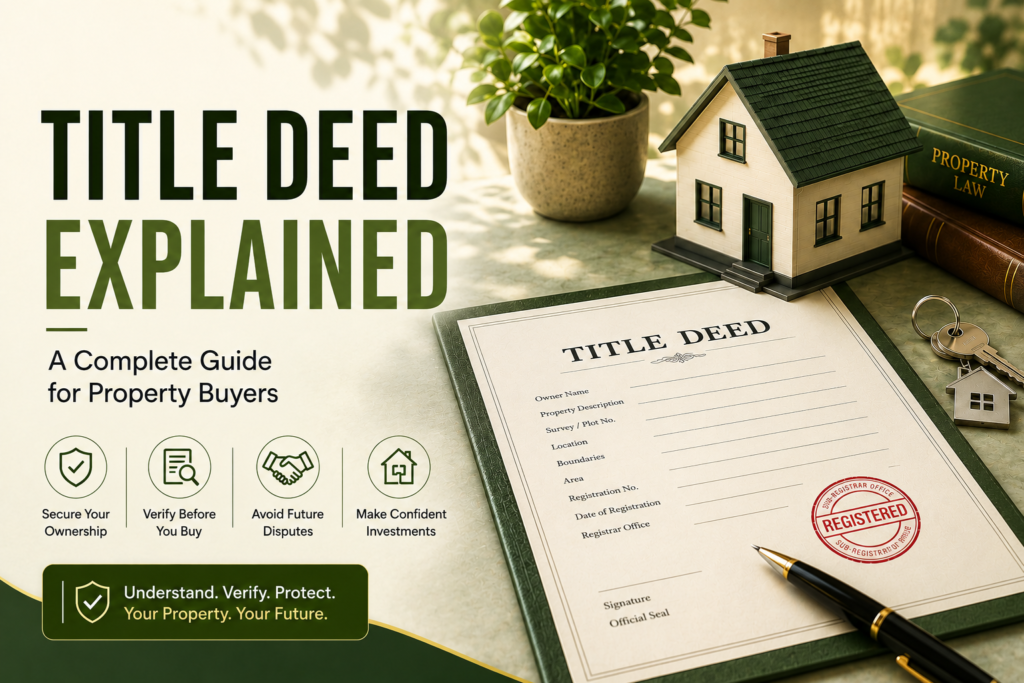
Buying property is one of the biggest financial commitments most people make yet many buyers focus so much on price, location, and amenities that they overlook the one document that actually protects their investment: the title deed. Without a valid title deed, you don’t truly own your property in the eyes of the law, no matter how much you’ve paid for it.
At BurrowNest, we believe informed buyers make better decisions. This guide breaks down everything you need to know about title deeds what they are, why they matter, the different types you’ll encounter, and how to obtain, verify, and correct one.
What Exactly Is a Title Deed?
A title deed is a legal document that formally records ownership of a property. It’s the paper trail that proves a specific person or entity holds legal rights to a piece of land or a building. When ownership changes hands through a sale, gift, or inheritance the title must be updated and registered with the appropriate government authority to make the transfer legally binding.
In simple terms, if the sale agreement is the promise, the title deed is the proof. It’s what you’d need to produce if your ownership were ever challenged, and it’s what any future buyer, bank, or court would rely on to confirm you have the legal right to sell, lease, mortgage, or transfer the property.
What Information Does a Title Deed Contain?
A properly drafted title deed isn’t just a name on a page it’s a detailed record designed to prevent disputes. Key elements typically include:
- Owner details — the full legal name and identifying information of the current owner
- Property particulars — exact location, dimensions, boundaries, and survey or plot numbers
- Chain of ownership — a history of previous owners and past transfers
- Registration information — the date, registration number, stamp duty paid, and the registering authority
- Encumbrances — any existing loans, liens, or legal claims attached to the property
- Usage rights and restrictions — easements, zoning limitations, or other conditions on how the property may be used
- Execution details — signatures of all parties and the official seal of the registering authority
A missing or vague entry in any of these areas is often the first sign of a problem, which is why careful review before purchase is essential.
Why the Title Deed Matters More Than You Think
It’s tempting to treat the title deed as paperwork to file away after closing, but its importance extends well beyond the transaction itself:
- It’s your legal proof of ownership — without it, your claim to the property has no standing.
- It shields you from disputes — a clean title protects you from rival claims, fraud, or ownership challenges down the line.
- It’s required for future transactions — selling, gifting, or passing the property to heirs all depend on a valid, registered title.
- It unlocks financing — banks and lenders require a clear title before approving a mortgage or loan against the property.
- It defines your rights and limits — the deed spells out exactly what you can and cannot do with the property.
- It affects resale value — properties with clean, well-documented titles command more buyer confidence and better prices.
The Different Types of Title Deeds
Not every property transaction uses the same kind of deed. The right one depends on how ownership is being transferred and what protections each party needs.
Sale Deed
The most common deed in real estate, used whenever property changes hands through a purchase. It records the buyer, seller, agreed price, and terms of the transaction. Once registered, full ownership legally passes to the buyer.
Gift Deed
Used when a property is transferred voluntarily and without any payment commonly between family members. A gift deed must still be registered to be legally valid, though it may qualify for stamp duty exemptions in certain family transfers.
Mortgage Deed
Executed when an owner pledges their property as security for a loan. It sets out the loan amount, repayment schedule, and the lender’s rights if the borrower defaults. The owner retains possession, but the lender holds a legal claim until the debt is repaid in full. Before signing one, it’s worth understanding the trade-offs:
- Defaulting on repayment can lead to the lender seizing and selling the property
- Interest, processing fees, and legal charges add to the overall cost
- The property generally cannot be sold or transferred until the loan is cleared
- An active mortgage may limit your ability to secure additional financing
Lease Deed
Governs the temporary use of a property by a tenant in exchange for rent. It outlines the lease term, rental amount, deposit, and each party’s responsibilities. While it grants usage rights, it never transfers ownership. Both landlords and tenants should be clear on what it covers: renewal and termination conditions, restrictions on subletting or modifications, and the consequences of damage or late payment including possible eviction for serious violations.
Warranty Deed
Offers the buyer a legal guarantee that the seller has clear, undisputed ownership and the right to sell. If undisclosed issues such as unpaid taxes or hidden claims surface after the sale, the seller bears legal responsibility. This makes it one of the more buyer-friendly deed types.
Quitclaim Deed
Typically used for informal transfers, such as between spouses or close relatives. It transfers whatever interest the seller has in the property without guaranteeing that the title is clear. Because it offers no protection against existing claims, it carries more risk than a warranty deed.
How to Obtain a Title Deed
Getting a title deed issued in your name involves completing property registration with your local land registration authority. While exact procedures vary by state, the general process looks like this:
- Gather your documents — the existing title deed, encumbrance certificate, prior deeds (if any), property tax receipts, identity and address proof, PAN details, and witness information.
- Visit the Sub-Registrar’s Office — submit your documents, pay the applicable stamp duty and registration fee, and complete signing in the presence of witnesses.
- Complete registration — the Sub-Registrar formally registers the deed and issues a receipt along with the registered document.
- Finish post-registration steps — apply to update ownership records at the local village or municipal office and revise property tax records accordingly.
Many states now offer online land registration portals that let you track applications and access records digitally, which can significantly speed up the process.
How to Verify a Title Deed Before You Buy
Verification is arguably the single most important step in any property purchase and one that’s often rushed. Before finalizing any deal, confirm the following:
- The seller listed on the deed matches the person you’re transacting with
- Property details (survey number, boundaries, area) match what’s actually being sold
- There’s a clean, traceable chain of ownership with no gaps
- No outstanding loans, liens, or legal disputes are attached to the property
You can request a certified copy of the title deed from the Sub-Registrar’s office where the property was originally registered, and many states also provide online verification tools through their land records portals. If anything looks inconsistent, it’s worth involving a property lawyer before proceeding.
Correcting Errors in a Title Deed
Mistakes happen a misspelled name, an incorrect boundary description, or an outdated address can all end up on a registered deed. The fix depends on the nature of the error:
- Minor factual errors (spelling, address details) can usually be corrected through a rectification deed, signed by both parties and registered with the local authority.
- Ownership changes require executing an entirely new deed such as a sale or gift deed and registering it afresh, along with the relevant fees and stamp duty.
Common Title Deed Problems and How to Resolve Them
| Issue | Recommended Solution |
|---|---|
| Errors in names, addresses, or property details | File a rectification deed signed by both parties |
| Missing or lost documents | Request certified copies from the registration authority |
| Duplicate ownership claims | Trace the ownership history and resolve through legal channels |
| Legal disputes over ownership | Consult a property lawyer and pursue formal resolution if needed |
| Undisclosed loans or claims | Obtain an encumbrance certificate to check for pending liabilities |
Final Thoughts
A title deed is more than a formality it’s the legal backbone of property ownership. Understanding what it contains, which type applies to your transaction, and how to verify it before you sign anything can save you from costly disputes down the road.
At BurrowNest, we’re committed to helping you navigate every stage of your property journey with clarity and confidence. If you’re buying, selling, or simply want a second opinion on a title deed, our team is here to help.